
- +91 76 8989 2020 Call Us Now
- enquiry@leelasuperspecialityhospital.com Drop Us a Line
- Home
- About Us
- Urology
- Andrology
- Sexology
- Dermatology
- Dermatology
- Cosmetology
- LASER Hair Removal Treatment
- Keloid Treatment
- Skin Whitening Treatment
- Chemical Peel Treatment
- PRP Therapy Treatment
- Earlobe Repair Treatment
- Liposuction Surgery
- HydraFacial Treatment
- Microneedling Radiofrequency (MNRF)Treatment
- Facial Rejuvenation
- Vaginal Rejuvenation
- Laser Treatment for Stretch Marks
- CO2 Laser Treatment
- Other Treatment
- General Medicine
- Patient Care
- Appointments
URS Surgery in Pune
URS Surgery in Pune Ureteroscopy for Kidney & Ureteric Stones Dr. Akhil Mane
URS surgery in Pune is now the most preferred, minimally invasive solution for kidney and ureteric stones — and Dr. Akhil Mane at Leela Superspeciality Hospital, Wakad, is one of the most experienced urologists in PCMC Pune performing this procedure. If you have been diagnosed with a kidney stone stuck in the ureter or kidney and are looking for kidney stone removal surgery in Pune without a large cut or long hospital stay, ureteroscopy is the procedure your urologist will most likely recommend. This page explains everything you need to know about URS surgery in Pune — what it is, how it works, what recovery looks like, and why Dr. Akhil Mane is the right choice for your treatment.
What Is URS Surgery? (Ureteroscopy Full Form and Meaning)
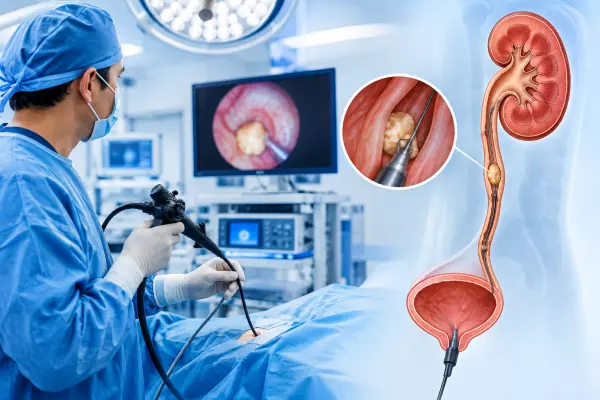
URS stands for Ureteroscopy — a minimally invasive endoscopic procedure used to diagnose and treat stones and other conditions in the ureter and kidney. The ureteroscopy meaning in simple terms: a thin, flexible or rigid tube called a ureteroscope is passed through the urethra, into the bladder, and up into the ureter — without any external incision on the body.
URS urology is one of the most commonly performed procedures in the field — and its popularity is driven by one simple fact: it works. URS surgery achieves a stone-free rate of over 95% for stones under 15mm — making it the gold standard for ureteric stone removal in modern urology practice. It is also referred to as endoscopy for kidney stones in common patient language, though the clinical term is always ureteroscopy.
When Is URS Surgery Recommended?
URS surgery in Pune is recommended when kidney or ureteric stones cannot pass on their own and require active removal. Dr. Akhil Mane evaluates each patient individually based on stone size, location, symptoms, and kidney function before recommending ureteroscopy to remove kidney stones.
Conditions Treated with Ureteroscopy:
Ureteroscopy is used to treat the following conditions:
- Stone in ureter removal — the most common indication; stones stuck in the ureter causing pain, obstruction, or infection
- Ureteric calculus removal — clinically confirmed stones in the ureter identified on ultrasound or CT scan
- Kidney stones in the renal pelvis or lower pole — when stone size or location rules out shock wave therapy
- Ureteric strictures — narrowing of the ureter blocking urine flow
- Tumours or polyps in the ureter — for biopsy or removal
- Recurrent urinary tract infections caused by persistent stones
- Blood in urine (haematuria) with no other identified cause
Patients searching for kidney stone treatment in Pune who have stones between 5mm and 20mm in the ureter are typically the best candidates for URS.
Which Kidney Stone Sizes Are Treated with URS?
The stone size guide for URS surgery:
- Below 5mm — Often passed naturally with medication and fluids
- 5mm to 10mm — Ideal for URS; high success rate with or without laser
- 10mm to 20mm — URS with laser lithotripsy is the preferred approach
- Above 20mm — May require PCNL surgery in Pune (Percutaneous Nephrolithotomy) for larger stones in the kidney
How Is URS Surgery Performed? Step by Step
Dr. Akhil Mane performs URS surgery in Pune using both rigid and flexible ureteroscopes depending on stone location and patient anatomy. Here is how the URS procedure works:
- Anaesthesia — Spinal or general anaesthesia is administered. The patient feels no pain during the procedure.
- Cystoscopy — A small scope is first passed into the bladder to locate the ureteric opening and inspect the bladder.
- Ureteroscope insertion — A thin ureteroscope (2–3mm diameter) is passed through the urethra, into the bladder, and guided up into the ureter.
- Stone identification — The ureteroscope’s camera provides a magnified, real-time view of the stone inside the ureter or kidney.
- Laser fragmentation — A laser fibre is passed through the ureteroscope. The laser breaks the stone into fine dust or small fragments — this is called laser lithotripsy for kidney stones.
- Stone removal — Fragments are removed using a small basket device passed through the ureteroscope.
- Stent placement — A soft, temporary ureteric stent (DJ stent) is placed to ensure smooth urine drainage while the ureter heals. This is the stent surgery for kidney stones step that many patients ask about.
- Procedure completion — The ureteroscope is removed. No external cut or stitches are required.
The entire URS procedure in Pune typically takes 45 minutes to 1.5 hours, depending on stone size, number, and location.
Rigid Ureteroscopy vs Flexible Ureteroscopy:
Understanding the difference helps patients know what to expect:
Flexible ureteroscopy in Pune is particularly important for patients with stones in the upper ureter or inside the kidney — where a rigid scope cannot reach. Dr. Akhil Mane uses flexible ureteroscopy with laser for complex stone cases requiring access to the kidney’s inner collecting system.
URS with Laser Lithotripsy How It Works?
Laser lithotripsy for kidney stones is the technique used within URS to break stones. A holmium laser fibre — as thin as a hair — is passed through the working channel of the ureteroscope and positioned directly against the stone. The laser pulses deliver targeted energy that fragments the stone into dust or small pieces that are either removed with a basket or passed naturally in the urine. Laser surgery for kidney stones in Pune through URS is the most precise stone fragmentation method available — with no radiation exposure and no damage to surrounding tissue.
URS vs PCNL vs. ESWL Which Treatment Is Right for You?
Choosing the right kidney stone removal procedure depends on stone size, location, composition, and your overall health. Here is a clear comparison:
Dr. Akhil Mane assesses every patient with imaging — typically a CT KUB scan — before recommending the most appropriate treatment. For most patients with ureteric stones, URS surgery in Pune is the first-choice procedure.
Benefits of URS Surgery for Kidney Stone Removal:
Ureteroscopic removal of kidney stones through URS offers significant advantages over traditional open stone surgery:
- No external incision — the procedure is entirely endoscopic, through natural body openings
- 95%+ success rate for stones in the ureter — the highest of any ureteric stone treatment
- Minimally invasive kidney stone surgery in Pune means less post-operative pain
- Short hospital stay — most patients are discharged within 1 to 2 days
- Faster return to work — most patients resume normal activity within 3 to 7 days
- Safe for patients of all ages — including elderly patients and those with single functioning kidneys
- Can treat stones not visible on X-ray — URS with direct vision works regardless of stone density or composition
- Simultaneous diagnosis and treatment — Dr. Akhil Mane can identify and remove the stone in a single procedure
- No radiation — unlike some stone treatments, URS does not expose the patient to radiation during the procedure itself
What to Expect Before, During, and After URS Surgery?
Before URS Surgery How to Prepare?
Patients undergoing URS surgery in Pune at Leela Superspeciality Hospital, Wakad are prepared as follows:
- Blood tests — CBC, kidney function tests (creatinine, urea), coagulation profile
- Urine culture — to rule out active urinary tract infection before surgery
- CT KUB scan — for precise stone mapping before the procedure.
- Medications — blood thinners are stopped 5 to 7 days before surgery
- Fasting — 6 to 8 hours before the procedure for anaesthesia preparation
- Antibiotics — given 1 hour before the procedure to prevent infection
During the Procedure What Happens?
The URS procedure in Pune is performed under anaesthesia in a sterile operation theatre. Dr. Akhil Mane uses a high-definition ureteroscope with laser access to locate, fragment, and remove the stone through the urinary tract. The procedure typically takes 45 to 90 minutes. Most patients have no recollection of the procedure and wake up in the recovery room with minimal discomfort.
After URS Surgery Recovery and Stent Removal:
Post-procedure care at Leela Superspeciality Hospital, Wakad:
- Ureteric stent — A temporary DJ stent is placed during the procedure and kept for 1 to 4 weeks to allow the ureter to heal. Ureteroscopy stent removal in Pune is performed as a simple outpatient procedure — no anaesthesia is required.
- Pain management — Mild discomfort and urinary frequency are normal in the first 24 to 48 hours and are managed with prescribed medication
- Fluid intake — Patients are encouraged to drink 2 to 3 litres of water daily to flush stone fragments and prevent new stone formation
- Activity — Light activity from Day 2; normal daily activities from Day 5 to 7
- Follow-up — A follow-up ultrasound or X-ray is scheduled 4 to 6 weeks after surgery to confirm complete stone clearance and arrange stent surgery for kidney stones removal
URS Surgery Recovery Time What Patients Ask Most?
Kidney stones surgery recovery time after URS is significantly shorter than open surgery. Here is a practical recovery timeline:
- Day 1: Observation in hospital — IV fluids, antibiotics, monitoring
- Day 2: Most patients are discharged — walking, light activity permitted
- Day 3 to 5: Mild urinary discomfort resolves — oral medications continued
- Day 5 to 7: Most patients return to desk work and normal daily activities
- Week 2 to 4: Stent removal scheduled — outpatient procedure
- Week 4 to 6: Follow-up imaging to confirm stone-free status
Total recovery time for URS surgery: 7 to 14 days for most patients. Patients with physically demanding jobs may need 2 to 3 weeks before returning to full work capacity.
URS Surgery Cost in Pune What to Expect?
URS surgery cost in Pune varies based on the type of ureteroscopy (rigid or flexible), use of laser, stone complexity, hospital stay duration, and stent removal as a separate procedure.
Approximate cost range for URS surgery in Pune:
- Basic rigid URS (without laser): 28,000 to Rs. 40,000
- URS with laser lithotripsy: 40,000 to Rs. 75,000
- Flexible URS with laser (complex cases): 60,000 to Rs. 1,00,000
- Stent removal (OPD procedure): 3,000 to Rs. 8,000
These figures include surgeon fees, OT charges, anaesthesia, hospitalisation, and basic post-operative medications. Kidney stone surgery in Pune at Leela Superspeciality Hospital, Wakad is priced transparently — with a detailed cost breakdown provided before the procedure. Most health insurance policies cover URS surgery — patients are advised to check their policy coverage before scheduling.
Why Choose Dr. Akhil Mane for URS Surgery in Pune?

Why patients choose Dr. Akhil Mane for URS surgery in Pune:
- Specialised urology training — MS (General Surgery) with advanced fellowship in urology and andrology
- High-volume URS experience — performs ureteroscopy procedures regularly with consistent stone-free outcomes.
- Flexible ureteroscopy expertise — skilled in both rigid and flexible ureteroscopy in Pune for all stone locations
- Laser lithotripsy proficiency — uses the latest holmium laser technology for precise stone fragmentation.
- Comprehensive stone management — from initial diagnosis to stent removal and long-term stone recurrence prevention
- Minimally invasive approach — prefers minimally invasive kidney stone surgery in Pune over open surgical approaches whenever clinically appropriate.
- Also an andrologist in Wakad, Pune — providing complete urological and male reproductive health care under one roof at Leela Superspeciality Hospital
Book an Appointment for URS Surgery in Pune
If you have been diagnosed with a kidney or ureteric stone and have been advised surgery — or if you are experiencing severe flank pain, blood in urine, or recurrent urinary infections — do not delay evaluation. Early treatment with URS surgery in Pune prevents complications like kidney damage, hydronephrosis, and recurrent infections.
Book a consultation with Dr. Akhil Mane — urologist in Wakad, Pune — at Leela Superspeciality Hospital for expert evaluation, accurate diagnosis, and the most appropriate kidney stone treatment in Pune for your specific condition.
- Hospital Name: Leela Superspeciality Hospital
- Clinic Location: Fourth floor, Westwood Estates Commercial Complex, 403-404, Kaspate Wasti, Wakad, Pune, Pimpri-Chinchwad, Maharashtra 411057
Book an Appointment for URS Surgery in Pune
Frequently Asked Questions About URS Surgery in Pune:
URS surgery stands for Ureteroscopy — a minimally invasive procedure where a thin scope is passed through the urethra, bladder, and into the ureter to locate, fragment, and remove kidney or ureteric stones without any external incision. The URS procedure takes 45 to 90 minutes under anaesthesia. Dr. Akhil Mane performs URS surgery in Pune at Leela Superspeciality Hospital, Wakad, using high-definition ureteroscopes and laser technology for precise stone removal.
Most URS procedures in Pune are completed within 45 to 90 minutes depending on stone size, number, and location. Simple lower ureteric stones with rigid ureteroscopy may take 30 to 45 minutes. Complex cases requiring flexible ureteroscopy for kidney stones or multiple stones may take up to 2 hours. Patients are advised to plan for at least 4 to 6 hours at the hospital on the day of the procedure, including pre-operative preparation and post-operative recovery.
Kidney stone surgery recovery time after URS is 7 to 14 days for most patients. Most patients are discharged within 1 to 2 days and return to light daily activities within 3 to 5 days. Patients with desk jobs typically return to work within 5 to 7 days. The ureteric stent placed during the procedure is removed 1 to 4 weeks later in a simple outpatient procedure. Ureteroscopy stent removal does not require anaesthesia and takes under 10 minutes.
URS surgery is performed under anaesthesia — so there is no pain during the procedure. After surgery, patients experience mild burning during urination, urinary urgency, and lower abdominal discomfort — all normal side effects of the temporary ureteric stent. These symptoms are managed with prescribed medications and resolve once the stent is removed. Most patients describe post-URS discomfort as mild to moderate and significantly less than the pain caused by the kidney stone itself.
The ureteric stent placed during ureteroscopy surgery in Pune is a temporary DJ stent that typically stays for 1 to 4 weeks — depending on stone complexity and the degree of ureteric inflammation during the procedure. Ureteroscopy stent removal is performed as a simple OPD procedure at Leela Superspeciality Hospital, Wakad — without anaesthesia. Dr. Akhil Mane advises every patient on the exact stent duration based on their individual case at the post-operative follow-up.
URS surgery cost in Pune ranges from Rs. 28,000 for basic rigid ureteroscopy to Rs. 1,00,000 for complex flexible ureteroscopy with laser in difficult stone cases. Most standard URS procedures with laser lithotripsy fall in the Rs. 40,000 to Rs. 75,000 range. Kidney stone surgery in Pune at Leela Superspeciality Hospital, Wakad is priced transparently — a detailed cost estimate is provided before the procedure. Most health insurance policies cover ureteroscopy — patients are advised to verify their coverage before the surgery date.
Yes — ureteroscopy to remove kidney stones is a completely scarless, incision-free procedure that removes stones entirely through the natural urinary tract. No cuts, no stitches, and no scars. For ureteric stones of 5mm to 20mm, URS surgery in Pune achieves complete stone removal in a single procedure in the majority of cases. Open surgery for kidney stones is now rarely required — and minimally invasive kidney stone surgery in Pune through URS has replaced it for most patients.
URS (Ureteroscopy) is used for stones in the ureter and smaller kidney stones — it is entirely scarless and uses a scope through the urethra. PCNL surgery in Pune (Percutaneous Nephrolithotomy) is used for large kidney stones above 20mm — it requires a small skin puncture on the back. URS has a shorter hospital stay (1 to 2 days) and faster recovery compared to PCNL (3 to 5 days). Dr. Akhil Mane selects the most appropriate procedure for each patient based on CT imaging and stone analysis.
Flexible ureteroscopy in Pune is used when the stone is located in the upper ureter, renal pelvis, or inside the kidney — areas that a rigid scope cannot access due to its straight, non-bending design. Flexible ureteroscopy uses a steerable scope that can navigate the kidney’s inner collecting system and reach stones in any location. Dr. Akhil Mane performs flexible ureteroscopy with holmium laser for complex kidney stone cases where rigid URS or ESWL treatment in Pune is not suitable or has failed.


 Trustindex verifies that the original source of the review is Google.
 Trustindex verifies that the original source of the review is Google.
 Trustindex verifies that the original source of the review is Google.
 Trustindex verifies that the original source of the review is Google.
