
- 06/05/2026
- Dr. Sarang Barbind
- 0 Comments
- General Medicine
Treatment of Heatstroke: Complete Emergency Care Guide
What Is Heatstroke?
Heatstroke is a serious medical emergency that happens when the body’s temperature rises above 40°C (104°F), and it can no longer cool itself down. It is the most severe form of heat-related illness and requires immediate medical attention.
Many people use the words sunstroke and heatstroke interchangeably. While both refer to the same condition, sunstroke specifically happens due to direct exposure to the sun, whereas heatstroke can also occur indoors in extremely hot and humid environments.
There are two types of heatstroke:
- Classic Heatstroke — Occurs in elderly people, young children, or those with chronic illness during a heatwave, even without physical activity.
- Exertional Heatstroke — Happens in young, healthy individuals during intense physical activity in hot weather, such as athletes, soldiers, or outdoor workers.
Without quick treatment for sunstroke or heatstroke, it can lead to organ failure, brain damage, or even death within minutes.
Heatstroke vs. Heat Exhaustion:
Before we go further, it is important to understand the difference between heatstroke and heat exhaustion because many people confuse the two.
Who Is Most at Risk?
Heatstroke and sunstroke can affect anyone, but some people are more vulnerable than others:
- Elderly people above 65 years — their bodies regulate heat less efficiently
- Infants and young children — their temperature regulation system is still developing
- Outdoor workers — construction workers, farmers, and delivery personnel exposed to direct sunlight
- Athletes and sportspersons — especially during summer training
- People with chronic illnesses — diabetes, heart disease, and kidney problems
- Those on certain medications — diuretics, antihistamines, antipsychotics, and beta-blockers reduce the body’s ability to cool down.
- Individuals who are overweight — excess body fat traps heat
- People not used to hot weather — tourists or those who have recently moved to hotter regions of India.
In India, peak heatstroke cases are seen between March and June, especially in states like Maharashtra, Rajasthan, Telangana, and Andhra Pradesh.
Symptoms of Heatstroke:
Knowing the heat stroke manifestations early can save a life. The manifestations of heat stroke include both physical and neurological signs.
Early Warning Signs:
- Heavy sweating that suddenly stops
- Feeling dizzy or lightheaded
- Nausea or vomiting
- Muscle cramps
- Weakness and fatigue
- Rapid heartbeat
Serious Heatstroke Symptoms:
- Body temperature above 40°C (104°F)
- Hot, red, and dry skin (no sweating)
- Confusion, slurred speech, or strange behaviour
- Seizures or fits
- Loss of consciousness or fainting
- Rapid and shallow breathing
If you notice any of these sunstroke symptoms in someone around you, do not wait. Every minute matters.
Call for Emergency Help Immediately:
In India, call:
- Emergency: 112
- Ambulance: 108
- Leela Superspeciality Hospital, Wakad, Pune: +91 7689892020 / 96373 11000— for direct emergency care
While waiting for help to arrive, move the person to a shaded or air-conditioned area and begin cooling immediately. Do not leave the person alone at any point.
Time is critical. Studies show that the faster the body is cooled, the better the chances of survival without long-term damage.
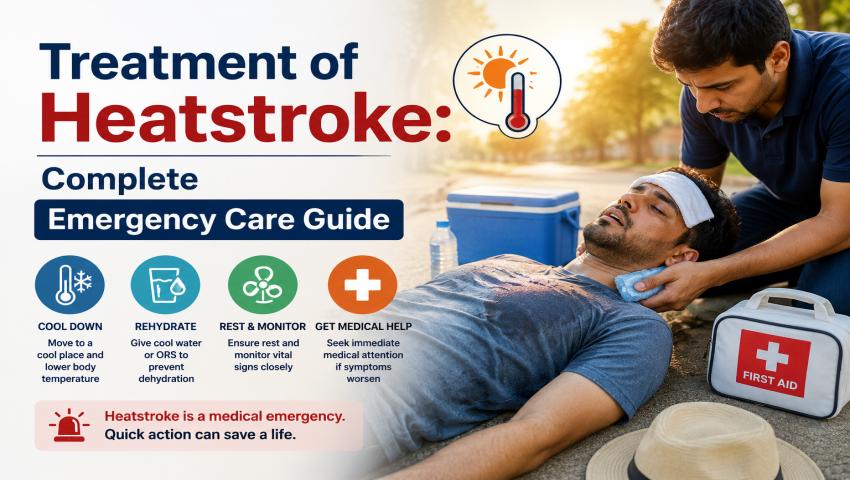
First Aid: What To Do Right Away?
Here are the step-by-step first aid actions to take while emergency help is on the way:
- Call emergency services immediately — dial 112 or 108
- Move the person to a cool, shaded, or air-conditioned space
- Lay them down and raise their legs slightly above heart level (unless they are unconscious)
- Remove excess clothing to allow body heat to escape
- Begin cooling the body using available methods (see next section)
- Monitor breathing — if they stop breathing, begin CPR if you are trained
- Do not give anything to eat or drink if the person is unconscious or confused
- Stay with the person until medical help arrives and inform the paramedics of the time symptoms started
These steps are simple but extremely effective when done quickly and correctly.
Cooling Techniques That Work:
Cooling the body fast is the most important part of heatstroke first aid. Here are the most effective methods:
- Most Effective — Cold Water Immersion: Submerge the person’s body in a tub of cold water (not ice-cold). This is the gold standard method used in hospitals and is the fastest way to bring down body temperature.
- Ice Packs on Pulse Points: Place ice packs or cold, wet cloths on the neck, armpits, groin, and wrists. These areas have large blood vessels close to the skin, which helps cool the blood faster.
- Evaporative Cooling: Spray cool water on the person’s skin and fan them continuously. This mimics sweating and helps bring down the temperature effectively.
- Air Conditioning: Move the person to an air-conditioned room or car immediately if cold water is not available nearby.
- Cool, Damp Sheets: Wrap the person in cool, wet sheets and continue fanning if immersion is not possible.
What Not To Do?
Avoiding these mistakes is just as important as knowing what to do:
- Do not give alcohol to rub on the skin — it can cause the skin pores to close
- Do not give fluids by mouth to an unconscious or confused person — risk of choking
- Do not use ice-cold water directly on the skin, as it can cause blood vessels to constrict and slow cooling
- Do not give paracetamol or aspirin — they do not work for heatstroke and can cause complications
- Do not leave the person in a hot car or closed room
- Do not assume the person will recover on their own — heatstroke is always a medical emergency
Treatment for Heatstroke at Leela Superspeciality Hospital, Wakad, Pune:
At Leela Superspeciality Hospital, Wakad, Pune, heatstroke cases are treated with a structured, evidence-based emergency protocol under the care of experienced specialists, including General Physician consultants and critical care experts.
Hospital-Level Treatment Includes:
- Rapid core temperature monitoring using rectal thermometers for accuracy
- IV fluid resuscitation to correct severe dehydration and electrolyte imbalance
- Controlled cooling using ice water immersion, cooling blankets, and fans
- Oxygen support for patients with breathing difficulty
- Blood tests — complete blood count, liver function, kidney function, clotting profile
- Neurological assessment to check for brain involvement
- ICU admission for patients with organ failure or prolonged unconsciousness
- Continuous vital sign monitoring until the patient is stable
Dr. Sarang Barbind and the medical team at Leela Superspeciality Hospital are well-equipped to handle both classic and exertional heatstroke cases, providing timely and comprehensive emergency care.
Recovery and Aftercare:
Recovery from heatstroke takes time and depends on how quickly treatment is received and how severe the case was.
What to Expect During Recovery?
- Rest completely for at least 1 to 2 weeks
- Drink plenty of fluids — water, coconut water, oral rehydration solution (ORS)
- Eat light, easily digestible meals — avoid spicy and oily food
- Avoid going outdoors during peak heat hours (11 AM to 4 PM)
- Avoid alcohol and caffeinated drinks during recovery
- Get follow-up blood tests to check kidney and liver function
- Avoid strenuous exercise for at least 4 weeks
When to Seek Immediate Help Again?
- Persistent confusion or memory problems
- Repeated vomiting
- Reduced or dark-coloured urine
- High fever returning after discharge
Recovery can take anywhere from a few days to several weeks, depending on the severity of the case and how quickly treatment is started.
Heatstroke Prevention Tips by Dr. Sarang Barbind:
Prevention is always better than a cure. Dr. Sarang Barbind, General Physician at Leela Superspeciality Hospital, Wakad, Pune, shares these simple and practical tips to prevent heatstroke and sunstroke this summer:
- Stay hydrated — drink at least 8 to 10 glasses of water daily; more if you are outdoors
- Avoid going out between 11 AM and 4 PM when the sun is at its strongest
- Wear light-coloured, loose-fitting, breathable clothing — cotton is best
- Use a hat or umbrella when stepping out in the sun
- Apply sunscreen with SPF 30 or above before going outdoors
- Eat water-rich foods — cucumber, watermelon, buttermilk, coconut water
- Never leave children or elderly persons in a parked car, even for a few minutes
- Acclimatise gradually if you have recently moved to a hotter region
- Keep your home ventilated — use fans, coolers, or air conditioning
- Check on vulnerable neighbours and family during heatwaves
- Avoid alcohol and caffeinated drinks, as they increase dehydration
Following these tips consistently during the summer months can greatly reduce your risk of developing heatstroke.
Conclusion:
Heatstroke is a life-threatening emergency, but it is also entirely preventable and treatable when recognised early. Understanding the heat stroke manifestations, acting fast with proper first aid, and seeking immediate medical care are the three most important steps in saving a life.
Whether it is classic heatstroke in the elderly or exertional heatstroke in a young athlete, the principles remain the same — cool the body fast, call for help, and get to a hospital immediately.
If you or someone around you shows signs of heatstroke or sunstroke this summer, do not delay. Rush to Leela Superspeciality Hospital, Wakad, Pune, for expert emergency care.
Stay cool. Stay safe. Stay hydrated.
FAQ's:
Heatstroke is caused when the body is exposed to very high temperatures and loses its ability to regulate internal heat. Common causes include prolonged exposure to direct sunlight, strenuous physical activity in hot weather, and high humidity that prevents sweat from evaporating. Dr. Sarang Barbind explains that dehydration, wearing heavy clothing in the heat, and being in poorly ventilated spaces are also major risk factors. Additionally, certain medications and pre-existing medical conditions can make a person more prone to heatstroke, requiring immediate care and attention.
The first step in treating sunstroke is to move the person to a cool and shaded area immediately and call emergency services. Remove excess clothing and begin cooling the body using cold water, ice packs on the neck, armpits, and groin, or evaporative cooling by spraying water and fanning. Do not give anything to eat or drink if the person is unconscious. Take the person to the nearest hospital for IV fluids, temperature monitoring, and further medical treatment as quickly as possible.
Sunstroke symptoms include a body temperature above 40°C, hot and dry skin, absence of sweating, rapid heartbeat, confusion or altered behaviour, dizziness, nausea, vomiting, headache, muscle weakness, seizures, and in severe cases loss of consciousness. If a person was previously sweating heavily and suddenly stops, this is a serious warning sign that must not be ignored.
Heatstroke can be prevented by staying well hydrated throughout the day and avoiding outdoor activity during peak sun hours between 11 AM and 4 PM. Dr. Sarang Barbind recommends wearing light and loose clothing, using a hat or umbrella, and eating cooling foods like watermelon and cucumber while avoiding alcohol and caffeine. Never leave children or elderly individuals in a parked car. During heatwaves, check regularly on vulnerable family members and neighbours and ensure good ventilation at home to stay safe from the extreme heat.
